|
If your
urine is not alkaline at 2:00 P.M. you are definitely
in
an acid condition.
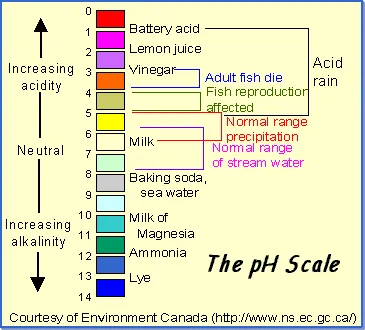
pH: What does it mean? pH is the abbreviation for potential
hydrogen. The pH of any solution is the measure of its
hydrogen-ion concentration. The higher the pH reading,
the more alkaline and oxygen rich the fluid is. The lower
the pH reading, the more acidic and oxygen deprived the
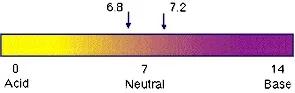
fluid is. The pH range is from 0 to 14, with 7.0 being
neutral. Anything above 7.0 is alkaline, anything below
7.0 is considered acidic.
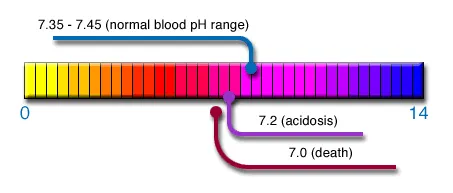
Human blood stays in a very narrow pH range right around
( 7.35 - 7.45 ). Below or above this range means symptoms
and disease. If blood pH moves to much below 6.8 or above
7.8, cells stop functioning and the patient dies. The ideal
pH for blood is 7.4
A healthy blood pH without cancer has acid + alkaline
balance almost equal. Actually a healthy body is slightly
alkaline measuring approximately 7.4. This ideal blood
7.4 pH measurement means it is just slightly more alkaline
than acid.
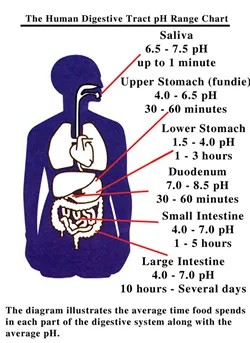 |
The pH in the human
digestive tract varies greatly (see Human Digestive
Tract pH Range Chart on the left
side). The pH of saliva is usually between 6.5 -
7.5. After we chew and swallow food it then enters
the fundic
or upper portion of the stomach which has a pH between
4.0 - 6.5. This is where "predigestion" occurs
while the lower portion of the stomach is secreting
hydrochloric acid (HCI) and pepsin until it reaches
a pH between 1.5 - 4.0. After the food mixes with
these juices it then enters the duodenum (small intestine)
where the pH changes to 7.0 - 8.5. This is where
90%
of the absorption of nutrients is taken in by the
body while the waste products are passed out through
the
colon (pH 4.0 - 7.0). |
"Strong
Acids, Weak Acids and Protein The
strong acids in our bodies are those that are
formed by the degradation of protein. These are
sulfuric acid, phosphoric acid and nitric acid.
These are strong, like the battery acid in your
car. Strong acids are strong in contradistinction
to weak acids such as vinegar and citrus juices.
Weak acids do not ionize (break apart completely)
when in solution whereas strong acids do. This
is why vinegar does not burn holes in your clothes,
or dissolve your bones; it does not break apart
completely into an acid and a base part, it remains
partly a salt. A salt is formed when an acid
and a base combine and neutralized each other.
In fact, vinegar, although an acid when you eat
it, does not stay that way. Weak acids like the
acetic acid in vinegar, tartaric acid and the acids
in most fruits and lemons contain lots of minerals
which are basic, along with their weak acid part.
The weak acid part combines with water and is converted
into carbonic acid which then breaks apart into
carbon dioxide and water. You breathe out the carbon
dioxide and pass the water out through your kidneys.
The minerals remain behind to replenish deficient
minerals so in fact these weak acids in the end,
alkalinize the body by adding more minerals to
it.
The opposite happens with
the excretion of strong acids as they take out
or leach minerals out of the body.
This is where the problem lies.
The Main Reason We Become Acid Is From
Over-consumption Of Protein
When protein breaks down in our bodies, it breaks
down into the above mentioned strong acids. These
three acids must be excreted by the kidneys because
they contain sulfur, phosphorus or nitrogen which
cannot break down into water and carbon dioxide
to be eliminated as the weak acids are. In their
passage through the kidneys these strong acids
must take a basic mineral with them because in
this way they are converted into their neutral
salts and don't burn the kidneys on their way out
as would happen if these acids were excreted in
their free acid form.
Sulfuric acid or any of the strong acids are
excreted mainly as the salts of sodium, potassium,
magnesium
or calcium as these are the main basic minerals
of the body, the ones that are the most plentiful.
The sulfur in sulfuric acid can and does combine
with the calcium in your bones for one and is excreted
as the corresponding salt which is called calcium
sulfate. This salt does not harm the kidneys on
its way through them but it does rob the body of
the needed basic calcium".
Source "The New Biology" |
If you have a health problem, most likely you are acidic.
Research shows that unless the body's pH level is slightly
alkaline, the body cannot heal itself. So, no matter what
type of modality you choose to use to take care of your
health problem, it won't be as effective until the pH level
is up. If your body's pH is not balanced, you cannot effectively
assimilate vitamins, minerals and food supplements. Your
body pH affects everything.
Total healing of chronic
illness only takes place when and if the blood
is restored to a normal, slightly alkaline pH. |
An Imbalance
In the body’s pH may lead to serious health concerns,
including:
Hormone concerns
Cardiovascular weakness
Weight gain/loss
Bladder and kidney concerns.
Immune deficiency
Acceleration of free radical damage.
Structural system weakness, including brittle bones, hip fractures and joint
discomfort
Stressed liver function
Low energy
Slow digestion and elimination
Yeast/fungal overgrowth.
Tumor growth
The body has to have a balanced pH like most living things
on earth or it does not function correctly. The alkaline
level is very important because research has already proven
that disease cannot survive in an alkaline state and yet
they thrive in an acidic environment.
 |
The truth is everyone has different nutrient requirements,
but we all share one thing in common - we need to have
alkaline blood to stay healthy. |
An acidic balance will: decrease the body's
ability to absorb minerals and other nutrients, decrease
the energy production in the cells, decrease it's ability
to repair damaged cells, decrease it's ability to detoxify
heavy metals, make tumor cells thrive, and make it more
susceptible to fatigue and illness.
An acidic pH can occur from, an acid
forming diet, emotional stress, toxic overload,
and/or immune reactions or any process that deprives
the cells of oxygen and other nutrients. The body will
try to compensate for acidic pH by using alkaline minerals.
If the diet does not contain enough minerals to compensate,
a build up of acids in the cells will occur.
Symptoms
There are two factors that are ALWAYS present with cancer
no matter what else may be present. Those two factors are
Acid pH and Lack of Oxygen. Can we manipulate those two
factors that always have to be present for cancer to develop
and by doing so may help reverse the cancer? If so, we
need to learn how to manipulate those two factors.
Cancer needs an acid and low oxygen environment to survive
and flourish within. Terminal cancer patients are around
1000 times more acidic than normal healthy people. The
vast majority of terminal cancer patients possess a very
low body pH. Why?
In the absence of oxygen, glucose undergoes fermentation
to lactic acid. This causes the pH of the cell to drop
from between 7.3 to 7.2 down to 7 and later to 6.5 in more
advanced stages of cancer and in metastases the pH drops
to 6.0 and even 5.7 or lower. Our bodies simply can not
fight disease if our body pH is not properly balanced.
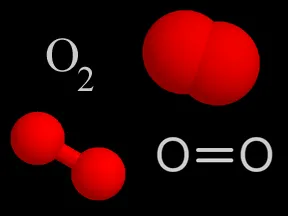 |
Shown here are four representations
chemists use for molecular oxygen. In colored molecular
models, oxygen is traditionally shown in red.
|
The normal human cell has a lot of molecular
oxygen and a slightly alkaline pH. The cancer cell has
an acid pH and lack of oxygen. Cancer cells cannot survive
in an oxygen rich environment. At a pH slightly above 7.4
cancer cells become dormant and at pH 8.5 cancer cells
will die while healthy cells will live. Again, the higher
the pH reading, the more alkaline and oxygen rich the fluid
is. Cancer and all diseases hate oxygen / pH balance. The
proper alkalinity pH of the blood ( 7.35 - 7.45 ) is critical
for the overall health of the body. In other words... alkalize
or die.
Baking
Soda and pH Levels
Sodium bicarbonate happens to be one of
our most useful medicines because bicarbonate physiology
is fundamental to life and health. |
Remember that the pH number is an exponent
number of 10; therefore, a small difference in pH translates
to a big difference in the number of oxygen or OH-ions.
A difference of 1 in a pH value means ten times the difference
in the number of OH-ions, a difference of 2 means one hundred
times the difference in the number of OH-ions. In other
words, blood with a pH value of 7.45 contains 64.9% more
oxygen than blood with a pH value of 7.30.

Blood cells have a negative charge
on the outside and a positive
charge inside; this is what keeps them
healthy and far apart from each other. However,
when your body is over-acidic, the acid strips
your blood of it's negative charge. Your blood
cells no longer have the same repelling force and
clump together like this:
|
Fact: If your body's pH is not balanced,
you cannot effectively assimilate vitamins, minerals and
food supplements. Also, mucus on the small intestine can
block your body from vitamin and mineral absorption. Learn
how to cleanse the colon and Kidneys... Click
Here
Cleanse the Liver Click
here
How
To Test Your pH Level...
"By the time you get up though, in the
morning, all the acids consumed and generated the
day before should be gone, excreted while you slept,
contained in your bladder and ready to be voided
when you wake. This first urine should be acid
when you get up in the A.M.. The urine pH you should
check though is the pH of the urine measured the
second time you empty your bladder in the morning
as this reflects the pH of the body fluids at that
time, in the morning, not the pH of the urine from
the night before.
Therefore, your A.M. urine, the second voided
specimen after you get up, should be back to
about neutral, close to pH 7.00 (pH 6.8 to be
exact). Because most everyone is acid, this is
hardly ever the case. More and more acids accumulate
day after day and chronic, degenerative disease
develops as the direct result of the pleomorphic changes
that take place in the blood as discussed above.
Each day we add to the acids not disposed of
the day before."
If
your urine is not alkaline at 2:00 P.M. you
are definitely in
an acid condition.
|

Salivary pH Test: While generally more acidic than blood,
salivary pH mirrors the blood ( if not around meals ) and
is also a fairly good indicator of health. It tells us
what the body retains. Salivary pH is a fair indicator
of the health of the extracellular fluids and their alkaline
mineral reserves.
A
few PH Measuring Tips
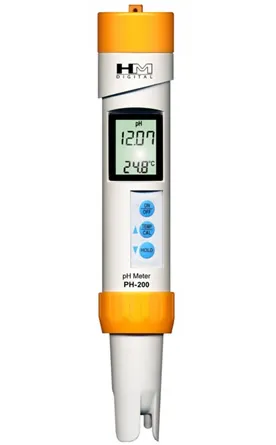
Optimal pH for saliva is 6.4 to 6.8. Spit onto to your
Portable PH Meter on arising before anything is put into
the mouth. A reading lower than 6.4 is indicative of insufficient
alkaline reserves. After eating, the saliva pH should rise
to 7.8 or higher. Unless this occurs, the body has alkaline
mineral deficiencies ( mainly Calcium and Magnesium ) and
will not assimilate food very well. To deviate from ideal
salivary pH for an extended time invites illness.
Acidosis, an extended time in the acid pH state, can result
in rheumatoid arthritis, diabetes, lupus, tuberculosis,
osteoporosis, high blood pressure, most cancers and many
more. If salivary pH stays too low, the diet should focus
on fruit, vegetables and mineral water as well as remove
strong acidifiers such as sodas, whole wheat and red meat.
Degenerative disease begins as a relatively
acid condition in the tissues of the body. These
tissues become oxidized, diseased and old. |
Urinary pH Test: The pH of the urine indicates how the
body is working to maintain the proper pH of the blood.
The urine reveals the alkaline building (anabolic) and
acid tearing down (catabolic) cycles. The pH of urine indicates
the efforts of the body via the kidneys, adrenals, lungs
and gonads to regulate pH through the buffer salts and
hormones. Urine can provide a fairly accurate picture of
body chemistry, because the kidneys filter out the buffer
salts of pH regulation and provide values based on what
the body is eliminating. Urine pH can vary from around
4.5 to 9.0 for its extremes, but the ideal range is 5.8
to 6.8.
"An imbalance happens, of course, if enough
alkaline food is not eaten and because the sodium
bicarbonate generated by the stomach's cover cells,
does not all go to the alkaline glands (pancreas,
liver, salivary glands and the alkaline glands in
the duodenum). On the way through the body to those
glands, some of it gets used up by neutralizing acid
residues from the previous meal and ones stored in
the connective tissue organ from before. If there
is not enough base left over after a meal, enough
base to neutralize and clear the acids stored in
the connective tissues, a relative base deficiency
develops which is again, the latent "acidosis".
When this happens the liver and pancreas don't
end up with enough alkaline juices to ensure proper
digestion.If
we are BASE DEFICIENT, and most of us are, then
our whole body is in a relatively acid condition.
That
is all there is to it." |
Click
Here View The PDF Version Of an Alkaline Acid Chart
Foods considered to be alkaline-forming and
thus helpful to people with consistently acid pH include:
almonds, aloe vera, apples, apricots, bee pollen, buckwheat,
cabbage, cantaloupe, celery, carrots, cucumbers, dairy
products except hard cheese, dates, dulse, poached eggs,
figs, grapefruit, honey, lettuce, millet, parsley, raisins,
peaches, fresh red potatoes, pineapple, soy products, sprouted
seeds, cooked spinach, turnip tops, wakame miso soup, azuki
beans, rice, mineral water. More alkaline-forming foods... Click
Here
"As far as preventative
or regular day to day medicine is concerned these
ph concepts are completely
disregarded by many modern, allopathic doctors.
Because this process of becoming acid correlates
directly
with the onset of old age and the development of
chronic degenerative disease it becomes more important,
in a way, to deal with it first, as an 'outpatient',
than as a patient in the hospital." |
People who remain too acid often display
symptoms such as: anxiety, diarrhea, dilated pupils, extroverted
behavior, fatigue in early morning, headaches, hyperactivity,
hypersexuality, insomnia, nervousness, rapid heartbeat,
restless legs, shortness of breath, strong appetite, high
blood pressure, warm dry hands and feet.

Balancing the pH is a major step toward well-being and
greater health. Acidosis ( overly acidic body ) is the
primary indicator of Calcium Deficiency Disease. Scientists
have discovered that the body fluids of healthy people
are alkaline ( high pH ) whereas the body fluids of sick
people are acidic ( low pH ).
Pleomorphism is a concept discovered in the early
1800s. Pleomorphic organisms are micro-organisms that
change form (pleo-change, morph-form), viral into bacterial
into fungal forms and back again. All micro-organisms
change form. Grown in a hospital laboratory, under
exactly the same growing conditions, a
streptococcus is always a streptococcus but change something, the pH of
the growth medium for example and that strep germ will change form into
something else, some other micro-organism. |

Foods considered to be alkaline-forming and thus helpful
to people with consistently acid pH include: almonds, aloe
vera, apples, apricots, bee pollen, buckwheat, cabbage,
cantaloupe, celery, carrots, cucumbers, dairy products
except hard cheese, dates, dulse, poached eggs, figs, grapefruit,
honey, lettuce, millet, parsley, raisins, peaches, fresh
red potatoes, pineapple, soy products, sprouted seeds,
cooked spinach, turnip tops, wakame miso soup, azuki beans,
rice, mineral water. More alkaline-forming foods.
People who remain too acid often display symptoms such
as: anxiety, diarrhea, dilated pupils, extroverted behavior,
fatigue in early morning, headaches, hyperactivity, hypersexuality,
insomnia, nervousness, rapid heartbeat, restless legs,
shortness of breath, strong appetite, high blood pressure,
warm dry hands and feet.
"So, in this acid condition we are talking
about, we aren't "acidotic" in so many
words, rather we are base deficient. This is why
80 or 90 year old, old folks, are shrunk up, little
people. They have no mineral stores left. When
all the minerals are gone, so are we, our battery
runs
down. It is just like a battery. The cells of our
body do carry a charge that can be measured as
the oxidation/reduction potential of the blood.
This
energy potential decreases with aging, just as
the minerals do. We become more oxidized (so the
need
for antioxidants). Both things occur because of
hyper-proteinization, too much protein." |

Balancing the pH is a major step toward well-being
and greater health. Acidosis ( overly acidic body ) is
the primary indicator of Calcium Deficiency Disease. Scientists
have discovered that the body fluids of healthy people
are alkaline ( high pH ) whereas the body fluids of sick
people are acidic ( low pH ).
Drinking
From this Water flask Daily will help keep your Body
Alkaline
MONITOR YOUR PH DAILY
Top of the Line
Waterproof pH Meter
Ideal for all pH testing, water
purification applications, wastewater regulation,
aquaculture, hydroponics, colloidal silver, labs & scientific
testing, pools & spas, .
FEATURES
• Measures pH and Temperature
• Auto-ranging three point calibration with digital fine tuning
• Includes storage solution in a sponge embedded in a clear cap
• Waterproof housing (IP-67 rating)
• Simultaneous temperature display
• Measurement Range: 0-14 pH
• Digital automatic calibration (one point), with digital fine tuning
• Automatic Temperature Compensation (ATC)
• Auto-off function, data-hold function and low-battery indicator
• Display: large and easy-to-read LCD screen includes simultaneous temperature
reading
• Factory Calibrated: The PH-200 meter is three-point checked and factory
calibrated to pH 7.0. It can be re-calibrated to any point in its range with
digital calibration using the push buttons.
• Includes a cap, batteries, lanyard, and pH 7.0 buffer
|
|
How much
water do you need?
The equivalent of 8 cups of water
for women and 12 cups of water for men is the minimum
amount of fluid recommended daily to replace water
losses under conditions of moderate activity, mild
temperature and altitude |
The Amazing
Healing Power Of Hydrogen Water
Are you feeling faint, moody, constipated, tired, fatigued,
achy, ill, or down? Well, what if I told you about a simple
magical elixir that might help all of those symptoms? A
tall glass of clean and clear hydrogen water. It may seem
like only a plain element in comparison to all the new
health drinks out there on the market, but hydrogen water
can help prevent the undesired symptoms mentioned above.
Here is why hydrogen water is the healthiest of beverages:
Oxidation
Reduction Potential. (ORP)

When your tap water arrives at your home, it will usually
be a little over neutral in pH ~ around 7.5.
It will, however, be robbed of its electrical negative charge and will almost
always have a 'positive' ORP .
This means it has no antioxidant abilities and cannot assist your body in the
fight against oxygen free radicals. On the contrary, it actually robs you of
energy as you drink it.

Click
to enlarge
The measurement of this positive or negative charge is
expressed in millivolts, so an ORP reading on our ORP meter
of tap water will most likely depending on your area show
around +350 millivolts. After it has been through Ionizing
Water filters it will most likely show anything from
-150 to -650mv (depending on the amount of soluble minerals
in the water and on the original pH of the water).
ORP is a "potential" energy that is stored and
ready to be put to work. An analogous way to look at ORP
would be to consider pressure. When you blow up a balloon
you use energy that creates force. As long as the balloon
remains closed, this force is a “stored potential
energy” in this case measured as air pressure. When
released, this “potential” energy becomes kinetic
energy.
Potential electrical energy in liquid can be measured.
It is measured with an ORP meter. These meters display
extremely slight, and highly variable differences in the
electrical properties of water. ORP readings are expressed
in millivolts (1/1000 of a single volt). ORP meters range
in price from $100 for a handheld “tester” to
over $3,000 for more sophisticated laboratory equipment.
ORP measures the presence of oxidizing or [oxidation]
reducing agents by their specific electrical charge, thus
Oxidation Reduction "Potential". Oxidation in
simple terms is what turns an apple brown after it is cut
or causes metal to rust. Rust weakens metal and signifies
the deterioration of the apple. High pH water has more "reducing" agents
(-ORP) and low pH water has more oxidizing agents (+ORP).
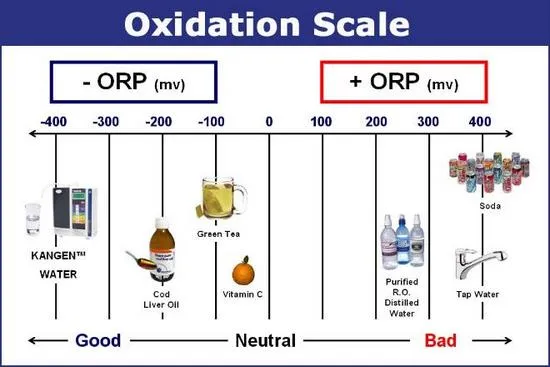
In electrical terms, potential energy can be measured.
When we use the term "potential" in describing
ORP, we are actually talking about electrical potential
as expressed in millivolts. This potential is measured
in water with an ORP meter. What you measure is the very
slight voltage in water. We are actually measuring the
presence of oxidizing or reducing agents by their specific
electrical charge, thus Oxidation Reduction "Potential".
High pH water has more "reducing" agents (-ORP)
and low pH water has more oxidizing agents (+ORP).
The ORP of most tap water in the USA is between +150
to +600mv
and so is an oxidizing agent. High pH
ionized water demonstrates a –ORP
and so is a reducing agent or “antioxidant”.
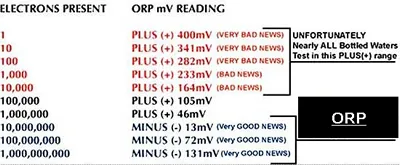
Aging or premature aging is a process
of oxidation within the body. In other words the body rusts and
is damaged by oxidation. The antioxidant
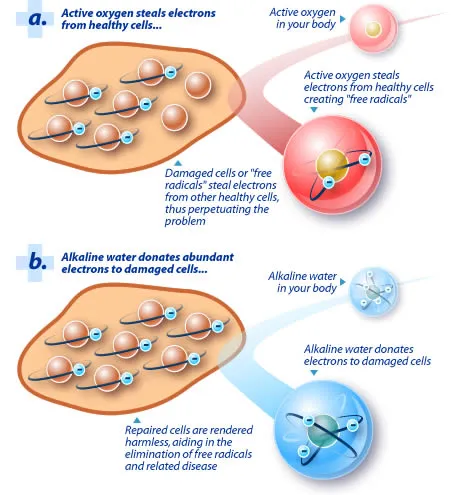
molecule has an extra ion and donates it to the free radical
effectively neutralizing it which is very important to
our health and longevity. This antioxidant effect is also
known as Oxidation Reduction Potential (ORP).
Air, food and water have an Oxidation Reduction Potential
(ORP) value which can be measured by an ORP meter which
is a millivolt measurement of negative and positive electrical
values .The higher the negative
ORP value the healthier is for us and more powerfully we
can neutralize free radicals
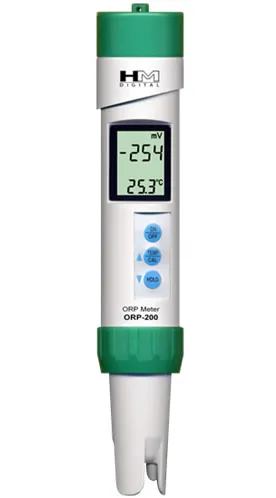
High Quality
Waterproof ORP Meter
Ideal for all ORP testing,
FEATURES
• Measures Oxidation Reduction Potential (Redox) and Temperature
• Auto-ranging calibration with digital fine tuning
• Includes storage solution in a sponge embedded in a clear cap
• Waterproof housing (IP-67 rating)
• Simultaneous temperature display
• Digital Calibration (push button)
• Auto-off function, data-hold function and low-battery indicator.
• Display: large and easy-to-read LCD screen includes simultaneous temperature
reading.
• Replaceable Sensor (model SP-O2)
• Factory Calibrated: The ORP-200 meter is factory calibrated to +92 mV
The meter can be easily recalibrated with digital calibration using the push
buttons, rather than a screwdriver.
• Includes a cap, batteries, and lanyard
Specifications
ORP Range: -999 to +1000 mV
Temperature Range: 0-80°C; 32-176°F
Resolution: 1 mV; Temperature resolution is 0.1°C/F
Accuracy: 0.5% (+/-2mV)
Calibration: Digital calibration by push button.
Housing: IP-67 Waterproof (submersible; floats)
Power source: 3 x 1.5V button cell batteries (LR44 or equivalent; included)
Dimensions: 18.5 x 3.4 x 3.4 cm (7.3 x 1.3 x 1.3 inches)
Weight: 96.4 g (3.4 oz) |
|
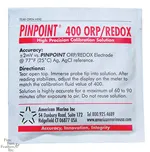 |
The American Marine ORP / REDOX Calibration
Fluid
400 mV
|
The
benefits of being well-hydrated:
Have you heard the saying that 8 glasses of water a day
helps keep your skin healthy? It's true, but there are
other benefits to getting those 8 glasses or more:
 Boosts
physical and mental endurance. Boosts
physical and mental endurance.
Helps
maintain a pleasant demeanor. Dehydrated adults and children
tend to be irritable and/or lethargic.
Helps
prevent muscle cramps in your legs, hands, and feet -- and
achy stiffness in your joints.
Can
prevent headaches. Are you prone to migraines, cluster headaches?
Ask yourself how much water you drink in a day. If it isn't
at least 48 ounces (preferably more), you might be dehydrated.
Some
studies show hydration can decrease the risk of kidney stones
and lower the risk of certain cancers by helping the body
to flush out toxins.
Helps
keep your digestive system working. Fluids soften the stools,
making them easier to pass.
Helps
prevent urinary tract infections by helping to flush away
bacteria.
Helps
keep pregnant women from being constipated -- and it can
also help the body flush away excess fluid that can lead
to bloating and edema (swelling).
Helps
nursing women with milk production. If you are having a problem
with milk supply, ask yourself how much water you're drinking.
Helps
keep your eyes and skin moist and healthy. When the body
is dehydrated, it looks for moisture from wherever it can
find it -- including the eyes and skin.
Can
help asthmatics breathe more efficiently, according to experts.
Apparently, dehydration interferes with how well the lungs
function (thereby increasing the likelihood of an asthma
attack).
If dehydration is the removal of water
from an object, then the treatment of dehydration to reverse
its effects would logically be rehydration
Effect of inadequate
water intake
Too little water can lead
to dehydration. If you are dehydrated, your blood
is literally thicker, and your body has to work much
harder
to cause it to circulate. As a result, the brain
becomes less active, concentration becomes difficult & your
body feels fatigued. |

Are
you Dehydrated???

Individuals' daily water requirements can vary due to
many factors - including amount of exercise performed,
total body weight, total lean muscle weight, and the temperature
and climate of your locale. Many people wait until they
are thirsty before reaching for a bottle of water. However,
thirst is a very unreliable measure of the water needs
for our bodies. The body can lose up to 2 or more cups
of water before thirst strikes. Not getting enough water
may result in a faster heart rate, thicker-than-normal
blood, lowered endurance capacities, and muscle cramps.
Drinking water in regular intervals throughout the day
is an important habit to develop.
Beverages containing alcohol and caffeine should not be
substituted for water. These types of beverages often have
diuretic properties, meaning that it encourages the body
to excrete more water. Diuretic substances promote dehydration.
Many believe that since these beverages are a liquid substance,
there is enough water in them to satisfy their daily water
requirements. This is untrue, as the chemical compounds
in these beverages cause you to let as much water go (if
not more) as you consume it.
Drink
to prevent thirst, not to quench it.
While some water is available
from the food we eat, the majority of the water
we need on a regular
basis must be provided by drinking pure water.
The consumption of tea, coffee, juice or soft drinks
should never be considered water intake. Many of
these drinks are so acidic that they end up pulling
more water from the cells to neutralize the acidity—making
dehydration even worse. |
Your body loses water even while sleeping.
Drinking a glass of water before going to bed or after
waking up will help your body function smoothly.
Water is so essential to the body, that it is a requirement
for proper immune system functioning. Whenever you get
sick, your body requires more water to help it fight off
infection. Fighting a cold or the flu can dehydrate your
body quickly.
Common signs of dehydration that are often ignored
include dark urine, afternoon fatigue, heartburn,
dry skin, acne, headaches and constipation. If these
are ignored, more serious problems develop. |
The Signs and
Symptoms of Dehydration
Symptoms of dehydration usually begin
with thirst and progress to more alarming manifestations
as the need for water becomes more dire. The initial signs
and symptoms of mild dehydration in adults appear when
the body has lost about 2% of it's total fluid. These mild
dehydration symptoms are often (but not limited to):
 Thirst Thirst
Loss
of Appetite
Dry
Skin
Skin
Flushing
Dark
Colored Urine
Dry
Mouth
fatigue
or Weakness
Chills
Head
Rushes
Asthma:
Increased histamine production in the body from chronic dehydration causes
the bronchioles to spasm and constrict. This is an attempt by the body
to conserve water. Water is going to be lost through respiration, so
the lungs are trying to conserve what it can. |
 |
Try this
simple test: Gently pinch the skin
on the back of your hand between your thumb and
forefinger for 5 seconds. Then count how many seconds
it takes for the skin to flatten out again. The
length of time it takes can be correlated with
age, dehydration, and skin health. Generally, those
between the ages of 45 and 50 have a return-response
time under 5 seconds, but by the age of 60, the
amount of time it takes for the skin to return
to its original position is double or triple (10-15
seconds), and by the age of 70, the response time
is typically 35-50 seconds.
The lack of resiliency in older skin is due to
a loss of water. As we age, the thirst mechanism
declines and water is lost from many areas of the
body. The structure of the water within our bodies
also deteriorates with age, making it less efficient
and less mobile. The aging process is literally
a withering of the tissues throughout the body–visibly
reflected in the skin.
|
If the dehydration is allowed to continue
unabated, when the total fluid loss reaches 5% the following
effects of dehydration are normally experienced:
Increased
heart rate
Increased
respiration
Decreased
sweating
Decreased
urination
Increased
body temperature
Extreme
fatigue
Muscle
cramps
Headaches
Nausea
Tingling
of the limbs
Be aware that these are not the only symptoms of dehydration
that may manifest , these are simply the most common. Symptoms
of dehydration will differ from person to person because
the body is a complex network and everyone's body is different
During dehydration, the only areas of the body that receive
allotments are those where water is absolutely necessary.
Blood, brain, kidneys, liver and digestive organs all take
priority over the skin and connective tissues; without
water, they begin to dry up.
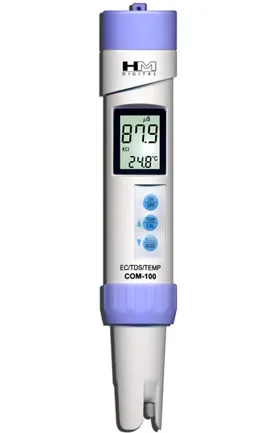 |
Combo Water Testing Meter
can
also measure the ppm of colloidal Silver
UPGRADED! Ideal for all water quality
testing, water purification applications, wastewater
regulation, aquaculture, hydroponics, colloidal
silver, labs & scientific testing,
pools & spas, ecology testing, boilers & cooling
towers, water treatment and more. The COM-100 is
a professional level EC/TDS meter.
more
info click here
I
would like to buy or Recieve More information
for this product Please call me: my phone number
is |
Top
of the Line Waterproof pH Meter
Ideal for all pH testing, water
purification applications, wastewater regulation,
aquaculture, hydroponics, colloidal silver, labs & scientific
testing, pools & spas, .
FEATURES
• Measures pH and Temperature
• Auto-ranging three point calibration with digital fine tuning
• Includes storage solution in a sponge embedded in a clear cap
• Waterproof housing (IP-67 rating)
• Simultaneous temperature display
• Measurement Range: 0-14 pH
• Digital automatic calibration (one point), with digital fine tuning
• Automatic Temperature Compensation (ATC)
• Auto-off function, data-hold function and low-battery indicator
• Display: large and easy-to-read LCD screen includes simultaneous temperature
reading
• Factory Calibrated: The PH-200 meter is three-point checked and factory
calibrated to pH 7.0. It can be re-calibrated to any point in its range with
digital calibration using the push buttons.
• Includes a cap, batteries, lanyard, and pH 7.0 buffer
|
I
would like to buy or Recieve More information
for this product Please call me: my phone number
is |
High
Quality Waterproof ORP Meter
Ideal for all ORP testing,
FEATURES
• Measures Oxidation Reduction Potential (Redox) and Temperature
• Auto-ranging calibration with digital fine tuning
• Includes storage solution in a sponge embedded in a clear cap
• Waterproof housing (IP-67 rating)
• Simultaneous temperature display
• Digital Calibration (push button)
• Auto-off function, data-hold function and low-battery indicator.
• Display: large and easy-to-read LCD screen includes simultaneous temperature
reading.
• Replaceable Sensor (model SP-O2)
• Factory Calibrated: The ORP-200 meter is factory calibrated to +92 mV
The meter can be easily recalibrated with digital calibration using the push
buttons, rather than a screwdriver.
• Includes a cap, batteries, and lanyard
Specifications
ORP Range: -999 to +1000 mV
Temperature Range: 0-80°C; 32-176°F
Resolution: 1 mV; Temperature resolution is 0.1°C/F
Accuracy: 0.5% (+/-2mV)
Calibration: Digital calibration by push button.
Housing: IP-67 Waterproof (submersible; floats)
Power source: 3 x 1.5V button cell batteries (LR44 or equivalent; included)
Dimensions: 18.5 x 3.4 x 3.4 cm (7.3 x 1.3 x 1.3 inches)
Weight: 96.4 g (3.4 oz) |
I
would like to buy or Recieve More information
for this product Please call me: my phone number
is |
Make
Hydrogen Water for the Whole Family
Explanation of Terms:
TDS = Total Dissolved Solids is a measure of the combined content of all organic
and inorganic substances contained in a liquid. High TDS levels indicate "hard
water", that can lead to scale buildup. Lower (10 - 60 pps) TDS is "soft
water" and it is considered the best water for drinking and proper hydration.
Micro-clustered* water structure means smaller, 4 to 6
molecules per clusters.
That is an ideal, smaller cluster size, that can be absorbed more easily via
osmosis.
pH = negative logarithm of hydrogen-ion concentration
and it shows whether a solution is acidic or alkaline.
pH values range from 0 to 14. Neutral, pure water has a value of pH = 7.
Acidic solutions have pH = 0 to 7, alkaline solutions have pH = 7 to 14 values.
ORP = Oxidation / Reduction Potential (Reduction Potential
or Redox Potential) is a measure of tendency of chemical
species to either acquire or donate electrons. Oxidative
agents (like free radicals) need and acquire electrons.
Reductive agents (antioxidants) have and donate electrons.
ORP is measured in millivolts (mV) (mV).
Positive values (+200 mV to +500 mV) represent oxidation
potential.
Neutral value is around +200 mV, assuming neutral pH=7 value.
Lower and negative values (+200 mV to -500 mV) represent the greater reduction
(antioxidant) potential.
rH2 = Relative Hydrogen Score shows the true reduction
potential, electron concentration / electron activity in
a solution
Molecular Bases of Hydrogen Effects
for the scientificaly minded
"Effects of hydrogen on various diseases have been
attributed to four major molecular mechanisms: a specific
scavenging activity of? hydroxyl radical, a scavenging
activity of peroxynitrite, alterations of gene expressions,
and signal-modulating activities. The four mechanisms are
not mutually exclusive and some of them may be causally
associated with other mechanisms.
The first molecular mechanism identified for hydrogen
was its specific scavenging activity of hydroxyl radical
[6]. Indeed, oxidative stress markers like 8-OHdG, 4-hydroxyl-2-nonenal
(4-HNE), malondialdehyde (MDA), and thiobarbituric acid
reactive substances (TBARSs) are decreased in all the examined
patients and rodents. As hydrogen can easily dissipate
in exhalation, hydrogen in drinking water is able to stay
in human and rodent bodies in less than 10?min (unpublished
data). Hydrogen, however, can bind to glycogen, and the
dwell time of hydrogen is prolonged in rat liver after
food intake [33]. A question still remains if mice and
humans can take a sufficient amount of hydrogen that efficiently
scavenges hydroxyl radicals that are continuously generated
in normal and disease states.
Another molecular mechanism of hydrogen effect is its
peroxynitrite-() scavenging activity [6]. Although hydrogen
cannot eliminate peroxynitrite as efficiently as hydroxyl
radical in vitro [6], hydrogen can efficiently reduce nitric-oxide-(NO-)
induced production of nitrotyrosine in rodents [34–38].
NO is a gaseous molecule that also exerts therapeutic effects
including relaxation of blood vessels and inhibition of
platelet aggregation [39]. NO, however, is also toxic at
higher concentrations because NO leads to -mediated production
of nitrotyrosine, which compromises protein functions.
A part of hydrogen effects may thus be attributed to the
reduced production of nitrotyrosine.
Expression profiling of rat liver demonstrated that hydrogen
has a minimal effect on expression levels of individual
genes in normal rats [40]. Gene ontology analysis, however,
revealed that oxidoreduction-related genes were upregulated.
In disease models of rodents, expression of individual
genes and proteins is analyzed. In many disease models,
hydrogen downregulated proinflammatory cytokines including
tumor necrosis-factor-(TNF-)??, interleukin-(IL-) 1ß,
IL-6, IL-12, interferon-(IFN-)??, and high mobility group
box 1 (HMGB1) [4, 23, 24, 36, 41–59]. Hydrogen also
downregulated nuclear factors including nuclear factor
kappa B (NFB), JNK, and proliferation cell nuclear antigen
(PCNA) [24, 44, 50, 55, 60–63]. Caspases were also
downregulated [10, 55–57, 62, 64, 65]. Other interesting
molecules studied to date include vascular endothelial
growth factor (VEGF) [15]; MMP2 and MMP9 [34]; brain natriuretic
peptide [48]; intercellular-adhesion-molecule-1 (ICAM-1)
and myeloperoxidase [36]; B-cell lymphoma 2 (Bcl2) and
Bcl2-associated X protein (Bax) [60]; MMP3 and MMP13 [38];
cyclooxygenase 2 (COX-2), neuronal nitric oxide synthase
(nNOS), and connexins 30 and 43 [66]; ionized calcium binding
adaptor molecule 1 (Iba1) [52]; fibroblast growth factor
21 (FGF21) [33]. Most molecules, however, are probably
passengers that are secondarily changed by hydrogen administration,
and some are potentially direct targets of hydrogen effects,
which need to be identified in the future.
Using rat RBL-2H3 mast cells, we demonstrated that hydrogen
attenuates phosphorylation of FceRI-associated Lyn and
its downstream signaling molecules [64]. As phosphorylation
of Lyn is again regulated by the downstream signaling molecules
and makes a loop of signal transduction pathways, we could
not identify the exact target of hydrogen. Our study also
demonstrated that hydrogen ameliorates an immediate-type
allergic reaction not by radical-scavenging activity but
by direct modulation of signaling pathway(s). In addition,
using murine RAW264 macrophage cells, we demonstrated that
hydrogen reduces LPS/IFN-induced NO production [67]. We
found that hydrogen inhibits phosphorylation of ASK1 and
its downstream signaling molecules, p38 MAP kinase, JNK,
and IB??without affecting ROS production by NADPH oxidase.
Both studies point to a notion that hydrogen is a gaseous
signal modulator. More animal and cells models are expected
to be explored to confirm that hydrogen exerts its beneficial
effect as a signal modulator." Source
1: Ohta. Recent progress toward hydrogen medicine: potential
of molecular hydrogen for preventive and therapeutic applications.
Curr Pharm Des 17:2241-52 (2011).
|





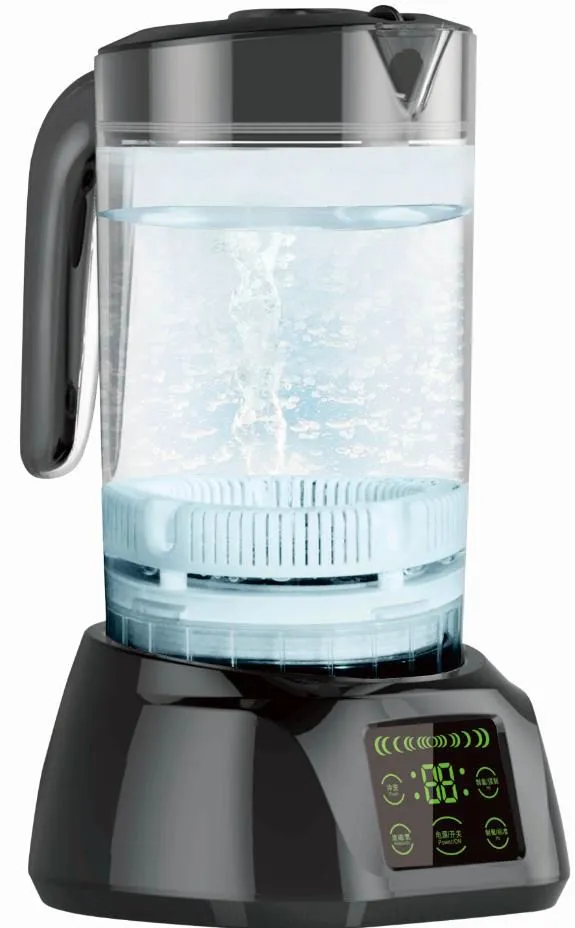
 Rated
Voltage: 100-240v 50/60 HZ 1.8A
Rated
Voltage: 100-240v 50/60 HZ 1.8A