|

Sleep
Until the 1950s, most people thought of sleep
as a passive, dormant part of our daily lives. We
now know that our brains are very active during sleep.
Moreover, sleep affects our daily functioning and
our physical and mental health in many ways that
we are just beginning to understand.
Nerve-signaling chemicals called neurotransmitters
control whether we are asleep or awake by acting
on different groups of nerve cells, or neurons, in
the brain. Neurons in the brainstem, which connects
the brain with the spinal cord, produce neurotransmitters
such as serotonin and norepinephrine that keep some
parts of the brain active while we are awake. Other
neurons at the base of the brain begin signaling
when we fall asleep. These neurons appear to "switch
off" the signals that keep us awake. Research
also suggests that a chemical called adenosine builds
up in our blood while we are awake and causes drowsiness.
This chemical gradually breaks down while we sleep.
During sleep, we usually pass through five
phases of sleep: stages 1, 2, 3, 4, and REM (rapid
eye movement) sleep. These stages progress in a cycle
from stage 1 to REM sleep, then the cycle starts
over again with stage 1 (see figure 1). We spend
almost 50 percent of our total sleep time in stage
2 sleep, about 20 percent in REM sleep, and the remaining
30 percent in the other stages. Infants, by contrast,
spend about half of their sleep time in REM sleep.
Sleep:
A Dynamic Activity
How Much
Sleep Do We Need?
What Does
Sleep Do For Us?
Dreaming
and REM Sleep
Sleep and
Circadian Rhythms
Sleep and
Disease
Sleep research is expanding and
attracting more and more attention from scientists.
Researchers now know that sleep is an active and
dynamic state that greatly influences our waking
hours, and they realize that we must understand sleep
to fully understand the brain. Innovative techniques,
such as brain imaging, can now help researchers understand
how different brain regions function during sleep
and how different activities and disorders affect
sleep. Understanding the factors that affect sleep
in health and disease also may lead to revolutionary
new therapies for sleep disorders and to ways of
overcoming jet lag and the problems associated with
shift work. We can expect these and many other benefits
from research that will allow us to truly understand
sleep’s impact on our lives
The Stages
of Sleep

Access
these frequencies with a Rife/Crane system
The background
activity of the brain is called the electroencephalogram
(EEG) and can be recorded by the use of scalp electrodes.
The dominant frequency and amplitude characteristic of the
surface EEG varies with states of arousal.
A
person goes through five stages while going to
sleep.
Calm
wakefulness is accompanied by alpha waves 8-12
Hz (cycles per second) and low voltage fast activity
of mixed frequency. This is called stage one. Alpha
waves disappear when we open our eyes.
As
sleep deepens into stage two, bursts of 12-14 Hz
(sleep spindles) and high amplitude slow waves
appear.
Rife/Crane
system
The
deep sleep of stages three and four is featured
by an increasing proportion of high voltage slow
activity. Breathing is regular in slow-wave sleep
or non-REM (Rapid Eye Movements) sleep.
Delta
activity (very slow waves, 0.5-4 Hz, high amplitude)
is unusual in a normal record and accompanies deep
sleep i.e. stages three and four sleep.
Rife/Crane
system
After
about 70 minutes or so mostly spent in stages three
and four, the first REM period occurs, usually
heralded by an increase in body movements, and
a shift in the EEG pattern from stage four to stage
two. These rapid low-voltage irregular waves resemble
those seen in alert humans; sleep, however, is
not interrupted. This is called stage 5 or REM
sleep, when the EEG activity gets desynchronised.
There is marked muscle atonia despite the rapid
eye movements in REM sleep, and the breathing is
irregular.
Theta
activity with a pattern of large regular waves
occurs in normal children and is briefly seen in
stage one sleep and also in REM sleep.
Non-REM
(NREM) sleep passes through stages one and two,
and spends 60-70 minutes in stages three and four.
Sleep then lightens and a REM period follows. This
cycle is repeated three or four times per night,
at intervals of about 90 minutes throughout the
night, depending on the length of sleep. REM sleep
occupies 25% of total sleeping time.
When
the eyes are opened, the alpha rhythm is replaced
by fast irregular low voltage activity with no
dominant frequency, called the alpha block. Any
form of sensory stimulation or mental concentration
such as solving arithmetic problems could produce
this break-up of the alpha rhythm. This replacement
of the regular alpha rhythm with irregular low
voltage activity is called “desynchronisation”.
Sleep
Disorders
At
least 40 million Americans each year suffer from
chronic, long-term sleep disorders each year, and
an additional 20 million experience occasional
sleeping problems. These disorders and the resulting
sleep deprivation interfere with work, driving,
and social activities. They also account for an
estimated $16 billion in medical costs each year,
while the indirect costs due to lost productivity
and other factors are probably much greater. Doctors
have described more than 70 sleep disorders, most
of which can be managed effectively once they are
correctly diagnosed. The most common sleep disorders
include insomnia, sleep apnea, restless legs syndrome,
and narcolepsy.
Insomnia
Sleep Apnea
Restless Legs Syndrome
Narcolepsy

Insomnia
Almost
everyone occasionally suffers from short-term insomnia.
This problem can result from stress, jet lag, diet,
or many other factors. Insomnia almost always affects
job performance and well-being the next day. About
60 million Americans a year have insomnia frequently
or for extended periods of time, which leads to
even more serious sleep deficits. Insomnia tends
to increase with age and affects about 40 percent
of women and 30 percent of men. It is often the
major disabling symptom of an underlying medical
disorder.
| Insomnia — a
chronic inability to fall and stay asleep — crops
up in most every adult’s life from time
to time. Newborn babies. Job pressures. Relationship
woes.
Any
number of things can trigger a sleepless
night, or perhaps a string of two or three.
If the problem persists for more than a
week, however, health experts say it’s
time to consult a doctor. Ditto if a lack
of ZZZ’s begins to interfere with
a person’s mood or ability to function.
Car
crashes, for instance, often can be traced
to sleepy drivers, according to the National
Sleep Foundation. The same can be said
for exhausted workers and industrial accidents.
And in one fictional case featured recently
in movie theaters, the syndrome hampered
a police detective from catching a murderer.
“Insomnia,” starring
Al Pacino as a detective tormented by both
an unsolved crime and Alaska’s “Midnight
Sun,” which bathes northern parts
of the state in light 24 hours a day.
Outside
Hollywood, of course, the causes of insomnia
can be much harder to pinpoint.
“There
are probably more types of insomnia than
you can shake a stick at,” said Dr.
Nicholas Messina, medical director of Vista
Medical Research in Mesa, Ariz. As proof,
he launched into a partial list — “food
allergy,” “delayed sleep phase,” “limit-setting” ... “idiopathic.” There’s
even “altitude insomnia,” which
primarily plagues mountain climbers
|
For
short-term insomnia, doctors may prescribe sleeping
pills. Most sleeping pills stop working after several
weeks of nightly use, however, and long-term use
can actually interfere with good sleep. Mild insomnia
often can be prevented or cured by practicing good
sleep habits (see "Tips for a Good Night’s
Sleep"). For more serious cases of insomnia,
researchers are experimenting with light therapy
and other ways to alter circadian cycles.
Your
Biological Rhythms

|
What
is CES used for?
CES was originally
developed in the Soviet Union in 1949,
it's primary focus being the treatment
of sleep disorders, hence it's initial
designation as "electrosleep." Treatment
of insomnia, however, has been overshadowed
by psychiatric application for depression
and anxiety.
SUGGESTED CES FREQUENCIES
FOR INSOMNIA
Alpha-Theta
Stim
Rife/Crane
system
Insomnia1.0,
3.59, 3, 7.83, 10, 1550, 1500,
880, 802, 6000, 304hz
|
Researchers
Gain Understanding of Sleep Loss and Fatigue
Fully
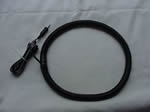
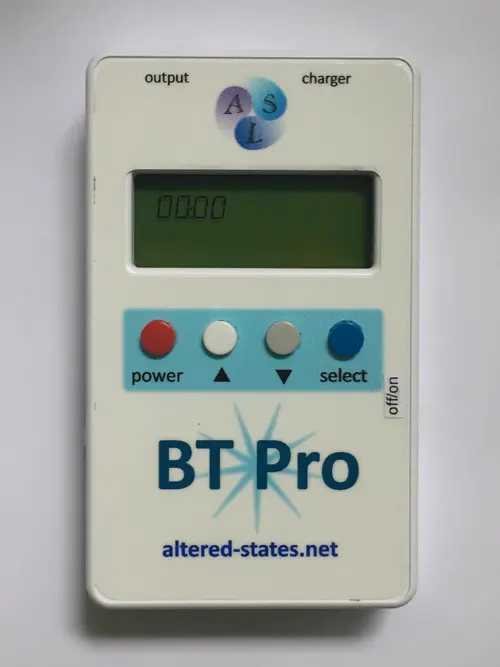
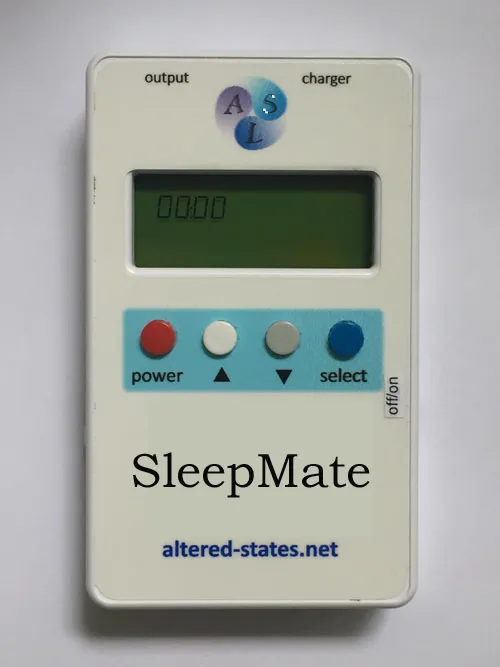
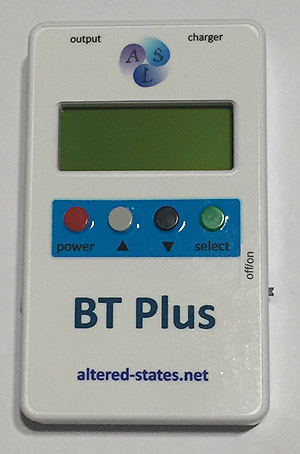
portable, built in Pulsed Electro Magnetic Pulsar
just pop it under your pillow, no messy wires,Sleep program
runs through sleep frequencies automaticaly...
+ Built
in extra Meditation program
for deep Stress, relaxation and feellings of well being...
Not
everyone will have the same results, and we cannot
make any medical claims but the experience of our
clients and the results of clinical studies on
PEMF's show (click
here for study details)amazing
improvements from 70 to 90 percent of those involved.
Fall asleep without trying
For more information click
below
Sleep-Mate

Sleep
Apnea

Sleep
apnea is a disorder of interrupted breathing during
sleep. It usually occurs in association with fat
buildup or loss of muscle tone with aging. These
changes allow the windpipe to collapse during breathing
when muscles relax during sleep (see figure 3).
This problem, called obstructive sleep apnea, is
usually associated with loud snoring (though not
everyone who snores has this disorder). Sleep apnea
also can occur if the neurons that control breathing
malfunction during sleep.
During
an episode of obstructive apnea, the person’s
effort to inhale air creates suction that collapses
the windpipe. This blocks the air flow for 10 seconds
to a minute while the sleeping person struggles
to breathe. When the person’s blood oxygen
level falls, the brain responds by awakening the
person enough to tighten the upper airway muscles
and open the windpipe. The person may snort or
gasp, then resume snoring. This cycle may be repeated
hundreds of times a night. The frequent awakenings
that sleep apnea patients experience leave them
continually sleepy and may lead to personality
changes such as irritability or depression. Sleep
apnea also deprives the person of oxygen, which
can lead to morning headaches, a loss of interest
in sex, or a decline in mental functioning. It
also is linked to high blood pressure, irregular
heartbeats, and an increased risk of heart attacks
and stroke. Patients with severe, untreated sleep
apnea are two to three times more likely to have
automobile accidents than the general population.
In some high-risk individuals, sleep apnea may
even lead to sudden death from respiratory arrest
during sleep.
An
estimated 18 million Americans have sleep apnea.
However, few of them have had the problem diagnosed.
Patients with the typical features of sleep apnea,
such as loud snoring, obesity, and excessive daytime
sleepiness
|
What
is CES used for?
CES was originally
developed in the Soviet Union in 1949,
it's primary focus being the treatment
of sleep disorders, hence it's initial
designation as "electrosleep." Treatment
of insomnia, however, has been overshadowed
by psychiatric application for depression
and anxiety.
SUGGESTED CES FREQUENCIES
FOR SLEEP
Alpha-Theta
Stim
Rife/Crane system
Sleeping
sickness 120 020 727 787 880
Sleeping Sickness 4,3,2,1,12,11 10,14, 20,120
Deep, dreamless sleep, trance state, non-REM sleep1-3 Delta:
Cranial
Electrical
Stimulation
|
Researchers
Gain Understanding of Sleep Loss and Fatigue
Better
Sleep Yields Better
Memory and Learning
Restless
Legs Syndrome
Restless
legs syndrome (RLS), a familial disorder causing
unpleasant crawling, prickling, or tingling sensations
in the legs and feet and an urge to move them for
relief, is emerging as one of the most common sleep
disorders, especially among older people. This
disorder, which affects as many as 12 million Americans,
leads to constant leg movement during the day and
insomnia at night. Severe RLS is most common in
elderly people, though symptoms may develop at
any age. In some cases, it may be linked to other
conditions such as anemia, pregnancy, or diabetes.
Many
RLS patients also have a disorder known as periodic
limb movement disorder or PLMD, which causes repetitive
jerking movements of the limbs, especially the
legs. These movements occur every 20 to 40 seconds
and cause repeated awakening and severely fragmented
sleep. In one study, RLS and PLMD accounted for
a third of the insomnia seen in patients older
than age 60.
RLS
and PLMD often can be relieved by drugs that affect
the neurotransmitter dopamine, suggesting that
dopamine abnormalities underlie these disorders’ symptoms.
Learning how these disorders occur may lead to
better therapies in the future.

Narcolepsy
Narcolepsy
affects an estimated 250,000 Americans. People
with narcolepsy have frequent "sleep attacks" at
various times of the day, even if they have had
a normal amount of night-time sleep. These attacks
last from several seconds to more than 30 minutes.
People with narcolepsy also may experience cataplexy
(loss of muscle control during emotional situations),
hallucinations, temporary paralysis when they awaken,
and disrupted night-time sleep. These symptoms
seem to be features of REM sleep that appear during
waking, which suggests that narcolepsy is a disorder
of sleep regulation. The symptoms of narcolepsy
typically appear during adolescence, though it
often takes years to obtain a correct diagnosis.
The disorder (or at least a predisposition to it)
is usually hereditary, but it occasionally is linked
to brain damage from a head injury or neurological
disease.
|
How
does CES work?
As with a number
of medicines, the mechanism of action (how
it works) of CES is not fully understood.
Research has led to the hypothesis that
it has a mild effect on the hypothalmic
area of the brain. Researchers also have
noticed rapid increases in serotonin, also
associated with relaxation and calmness,
and decreases in cortisol, one of the primary
stress-related biochemicals. Interestingly,
CES also increases levels of norepinephrine
and dopamine, both associated with alertness
and feelings of pleasure. This may be why
so many CES users report feeling both relaxed
and alert.
Alpha-Theta
Stim
Rife/Crane system
Cranial
Electrical
Stimulation
|
|
Please
send this page to a friend
|
|

Better
Sleep Yields Better Memory and Learning
Tips
for a Good Night’s Sleep:
Adapted from "When You Can't Sleep:
The ABCs of ZZZs," by the National Sleep Foundation.
Set a
schedule:
Go to bed at a set time each night and get up at the same time each morning.
Disrupting this schedule may lead to insomnia. "Sleeping in" on
weekends also makes it harder to wake up early on Monday morning because
it re-sets your sleep cycles for a later awakening.
Exercise:
Try to exercise 20 to 30 minutes a day. Daily exercise often helps people
sleep, although a workout soon before bedtime may interfere with
sleep. For maximum benefit, try to get your exercise about 5 to
6 hours before going to bed.
Avoid
caffeine, nicotine, and alcohol:
Avoid drinks that contain caffeine, which acts as a stimulant and keeps
people awake. Sources of caffeine include coffee, chocolate, soft drinks,
non-herbal teas, diet drugs, and some pain relievers. Smokers tend to
sleep very lightly and often wake up in the early morning due to nicotine
withdrawal. Alcohol robs people of deep sleep and REM sleep and keeps
them in the lighter stages of sleep.
Relax
before bed:
A warm bath, reading, or another relaxing routine can make it easier
to fall sleep. You can train yourself to associate certain restful activities
with sleep and make them part of your bedtime ritual.
Sleep
until sunlight:
If possible, wake up with the sun, or use very bright lights in the morning.
Sunlight helps the body’s internal biological clock reset itself
each day. Sleep experts recommend exposure to an hour of morning sunlight
for people having problems falling asleep.
Don’t
lie in bed awake:
If you can’t get to sleep, don’t just lie in bed. Do something
else, like reading, watching television, or listening to music, until
you feel tired. The anxiety of being unable to fall asleep can actually
contribute to insomnia.
Control
your room temperature:
Maintain a comfortable temperature in the bedroom. Extreme temperatures
may disrupt sleep or prevent you from falling asleep
Yearning
for a good night’s rest? Try some of these
suggestions, courtesy of the Washington, D.C.-based
National Sleep Foundation.
Establish
a sleep routine, hitting the hay at about the same
time each night.
l Try to relax before bedtime by taking a hot bath, reading or otherwise
unwinding. (Don’t read in bed, however; the experts say you should
reserve the mattress for sleep or sex.)
Forgo coffee and other forms of caffeine in the late afternoon and evening.
The same goes for alcohol, which can interrupt sleep later in the night.
Exercise regularly, but allow at least three hours between your workout
and bedtime.
Make your sleep environment as dark and quiet as possible. Avoid bright
lights and television.
If, after 30 minutes, you don’t fall asleep, get up and do something
stress-releasing until you feel sleepy. Then lie down again.
Don’t dwell on daily problems. Instead, write a “worry list” of
items that you will address in the morning, then forget about them.
Regular
use of a good CES Device according to many clients
insures great sleep Alpha-Theta
Stim
|
CES
increases the conversion of amino acids to
neurotransmitters. Its particular mode of
operation is as a corrective measure for
brain dysrhythmia. Brain rhythm influences
the development of psychiatric conditions
as well as poses as a trigger that induces
physical manifestations of illness. Through
the positioning of the stimulating electrodes,
CES connects the diurnal rhythm of head and
heart through the vagus nerve. It thereby
functions as an anti-dysrhythmic on a whole-body
level.

Alpha-Theta
Stim


Rife/Crane system

Cranial
Electrical
Stimulation
|
Beneficial
Effects of Pulsed Electromagnetic Fields
Pulsed
Magnetic Field Therapy… How
Does It Work ?
Magnet
Therapy for Fibromyalgia
Magnetic
Healing Does it work?
Biomagnetic
Therapy
Clinical
Studies

Sleep & Magnetic
Mattress Blankets

Beth
using a fully programable Magnetic Field pad
How does lack of sleep affect
our lives?
Sleep
is a key part of maintaining your health, affecting
everything in your life, from how you feel to your
relationships with others. Lack of sleep negatively
affects your physical health, your ability to handle
stress, and your general mood. Even one night of
disrupted or missed sleep can reduce productivity
and increase the chances of accidents at home or
work.
Lack
of sleep compromises your body's immune system
and adversely affects metabolism and memory. On
average, people are 55% less successful at simple
memory tests after a sleepless night, because the
entire brain's ability to function decreases.
One-in-three
American adults (over 57 million) experience nighttime
sleeplessness due to back pain, headaches, and
muscle aches and pains, losing an average of 22
hours of sleep per month - the equivalent of nearly
three full nights of sleep. More than 60% of adults
over the age of 50 suffer from sleeplessness due
to arthritic pain
at night.
The
earth's magnetic field is essential to all life
The
earth's natural magnetic field plays an important
role in maintaining proper electromagnetic balance
of the body's internal systems. Currently, the
earth's magnetic field measures 0.4 gauss. Several
thousand years ago the earth's magnetic field measured
4 gauss, which was 1000% stronger than it is today.
Why
is this happening?
Scientists
are able to determine the alignment of the earth's
magnetic poles, as well as the strength of the
earth's magnetic field through measurements of
iron-rich minerals in sediment samples taken from
deep within the earth. Samples dating back 3 billion
years have shown that the earth's magnetic poles
reverse approximately every 200,000 years, which
is believed to be the result of directional shifts
in the earth's molten core.
Recently,
a team of researchers at UCLA used super computers
to analyze data from 33 of these samples, and re-create
a history of the earth's magnetic field dating
back 800,000 years. The computer model clearly
showed that the earth's magnetic field declines
dramatically over a several thousand-year period
preceding a magnetic pole reversal. This data has
lead many scientists believe that the rapid decline
in the earth's magnetic field over the past several
thousand years is a clear indication that a pole
reversal is underway.

Earth
pulse SCHUMMAN RESONATOR

How
does this affect us?
Scientists
are now certain that the declining magnetic field
detrimentally affects life on earth. In addition,
many scientists believe that modern technology,
such as steel structure buildings, cars, and trains
absorb the earth's magnetic field, causing a further
reduction in its strength.
Since
these conditions are very recent developments in
the history of man's existence on earth, it seems
logical that the human body has not had time to
adapt to the earth's rapidly decreasing magnetic
field; hence the rapid increase in the rate of
chronic illnesses worldwide. Following 20 years
of research, Dr. Kyoichi Nagawa, a leading scientist
in the field of biomagnetics, concluded that the
much weaker magnetic field of modern times has
caused what he has termed magnetic deficiency syndrome.
The symptoms include stiffness in the shoulders,
back and neck; insomnia; chest pains; headaches;
and dizziness. The long-term consequences of magnetic
deficiency syndrome include the development of
chronic and degenerative diseases; the loss of
normal healing ability; and increased susceptibility
to infections and the effects of environmental
toxins.

Sacred
Harmony Resonator

Magnetic
Therapy

Beth
using a fully programable Magnetic Field pad
No-one
knows exactly how bioelectromagnetic therapy
works, but there are several interesting theories.
Restoring electro-magnetic balance:- Each cell
acts as an electro-magnetic unit producing its
own magnetic field. During health, cells vibrate
with their own characteristic electromagnetic
frequency.
During
disease, a cell's electromagnetic vibration changes.
This effect is used to diagnose heart problems
for example. During health, a heart trace (electrocardiogram
or ECG) will show a particular pattern. If cells
lack oxygen due to reduced blood flow in coronary
heart disease, characteristic changes occur in
the ECG that help to diagnose the problem.
In
the most simple terms, magnetic therapy helps
to restore health by helping cells regain their
natural electromagnetic frequency.
AND
IF YOUR CELLS ARE HEALTHY AND HAPPY
YOU SLEEP WELL
RIFE
MAGNA COILS
New
research gives hope that early diagnosis, proper
medical treatment, and self-management strategies
can help optimize function, reduce pain, and improve
quality of life. Individuals should consult with
a health care provider for advice appropriate to
their medical needs.
Please
send this page to a friend 
|
 |

|